
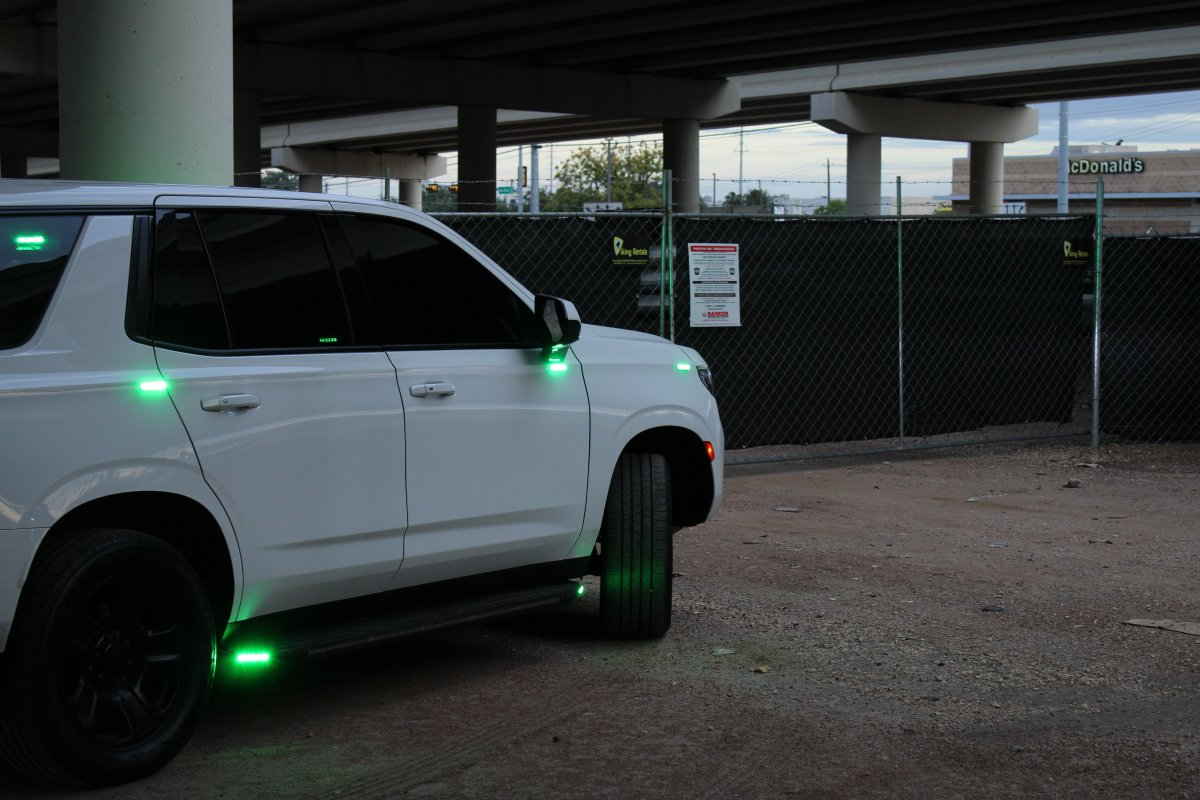
A patrol that only drives past can miss what matters. At Ranger Protection Agency, our philosophy is Resolve and Report, Not Observe and Report. Our officers take appropriate, lawful action to address security concerns rather than simply watching and writing them down.
This article explains how Ranger’s nighttime mobile patrol officers inspect a property, make contact, respond to problems, and document what they find, so apartment managers, regional managers, property owners, and commercial decision-makers know what to expect.
Mobile patrol provides up to a contracted number of patrol stops per night, not continuous on-site coverage. Officers cannot be at every location at once, and no security service can promise to prevent every incident. Properties that need a constant on-site presence can add on-site security officers.
Key Takeaways
- Clear communication and incident records help turn a patrol observation into a coordinated response.
- Checks of windows, gates, parking areas, and alleyways focus attention on places that are easy to overlook after dark.
- Unusual activity calls for assessment and a response suited to the incident, not passive observation.
- Mobile and low-visibility checks can help cover a property while adapting patrol attention to its layout and risks.
Communications devices and incident reporting
Reliable communication connects an officer’s observations to a clear response. A patrol plan should establish check-ins, approved equipment, and procedures for recording incidents.
Communication During Solo Response
Communication keeps an officer connected while working away from colleagues. Belfry, Ranger’s GPS-enabled reporting platform, uses property-specific geofencing to help verify that reporting and time actions occur while officers are on the property. A radio or cell phone lets the officer request support and share their location. This matters in isolated areas, where a lone officer may not have a colleague nearby.
Patrol Program and Equipment Communication
Ranger officers use cellular radios, mobile phones, and Belfry to communicate security concerns, request assistance, and document incidents. Reports include the location, circumstances, actions taken, relevant photographs, and notifications made. This allows supervisors and authorized property management personnel to review security activity and understand what officers did to address each situation.
Checking windows, gates, parking lots, and alleyways
Overnight inspections focus on entry points, perimeter routes, and less visible spaces. Officers look for specific changes, such as a damaged latch or an unfamiliar vehicle.
Building and Perimeter Checks
Building and perimeter checks cover the exterior and access points along a property’s boundary. Officers inspect parking lots, garages, buildings, breezeways, common areas, gates, and doors according to each property’s requirements, using a flashlight where visibility is poor. They look for unsecured access points, damage, and suspicious activity. Unlike a routine drive-through, officers get out of the vehicle when safe and appropriate, compare what they see with the site’s expected condition, and speak with people who may not belong there.
Fire, Safety, and Property-Damage Checks
Fire, safety, and property-damage checks identify hazards that could worsen before employees return. Officers look for smoke, visible flames, water leaks, broken lights, damaged fencing, or fresh graffiti. Any sign of fire calls for immediate escalation to emergency services, not an attempt to enter an unsafe space.
Patrol Stops and Accountability
Officers report through Belfry, which combines GPS-enabled reporting, property-specific geofencing, and digital incident documentation. Management can review where and when patrol activity was recorded.
Patrol timing is intentionally randomized and unpredictable. Ranger does not guarantee patrol intervals or response times. The number of stops is part of the service agreement, but the real measure is what officers accomplish during each stop.
Incident response and property inspections
A patrol inspection becomes an incident response when an officer finds an immediate threat, damage, or equipment failure. Unusual sounds, an open access point, or a fire alarm each calls for assessment, action, and a clear record.
For an apparent break-in in progress, officers assess the situation and take appropriate, lawful action based on what they can safely observe. A damaged entry point with no immediate threat still needs prompt documentation and notification through the property’s established contacts. The response depends on the circumstances.
Incident documentation turns a brief observation into a useful account. A patrol log can record the time, location, conditions, actions taken, and people notified for later review. For example, “rear service door found open; area checked from a safe position; supervisor notified” is more useful than “door issue.” Factual language helps property managers distinguish a verified condition from an assumption.
Mobile patrols and low-visibility inspections
Mobile Patrols
A mobile patrol uses a vehicle to cover multiple parts of a property. This helps officers reach distant buildings, perimeter roads, garages, and parking areas during a visit. GPS-enabled reporting and geofencing support location verification.
Visits should reflect the property’s layout and likely risks. Ranger’s patrol timing is intentionally randomized, which makes it harder for unauthorized individuals to anticipate the next visit. Officers investigate suspicious activity instead of simply driving past.
Hypothetical scenarios, not actual company incidents:
- Apartment community: an officer notices a person trying car doors in a parking lot, makes contact, requests that they leave, contacts law enforcement if needed, and documents the event with photos in Belfry.
- Shopping center: after closing, an officer finds a group gathered at a rear service entrance, communicates property rules, and reports the recurring issue to management.
- Commercial office park: an officer finds an unlatched gate and an unfamiliar vehicle near a loading dock, speaks with the driver, notifies the site contact, and records the details.
Low-Visibility Inspections
Low-visibility inspections assess areas where darkness, shadows, or poor lighting make details harder to see. Officers can use a bright flashlight to examine a dark loading area, a recessed entrance, or a section affected by a power outage. A deliberate sweep helps distinguish a real concern, such as an open gate, from a shadow or ordinary site condition.
Ranger Protection Agency: NIGHTTIME MOBILE PATROL
Ranger Protection Agency provides proactive nighttime mobile patrol services for apartment communities, shopping centers, and commercial properties throughout the greater Austin area. Our officers conduct purposeful inspections, address security concerns within their legal authority, and document their actions through Belfry.
Whether your property needs randomized nighttime patrols, daytime mobile patrol, dedicated on-site security officers, or a combination of services, Ranger can help you evaluate the appropriate coverage.
Learn more about our Nighttime Mobile Patrol services or contact Ranger Protection Agency to request a customized security proposal.
Frequently Asked Questions
How to Apply for Night Patrol Security Services?
Contact Ranger Protection Agency and describe your property, operating schedule, and security concerns. For a commercial or multi-family property in Austin, Pflugerville, Manor, Round Rock, Cedar Park, Leander, Georgetown, Westlake, Kyle, or Buda, share the site address and identify key entrances, parking areas, and access procedures. Naming a property contact and explaining how staff should receive updates helps shape a workable patrol plan.
How do patrol companies document incidents and provide client reports?
Ranger officers document incidents digitally in Belfry, with photographs and GPS-enabled reporting, then share relevant information with designated property contacts. A useful report identifies the location, time, observed condition, and action taken. Property managers can use those details to assign follow-up, track recurring concerns, and update staff instructions.
Leave a Reply